From lavarello and missoltini to perch risotto and traditional fishermen’s recipes: a journey through the flavours that tell the story of Lake Como’s culinary heritage.
The cuisine of Lake Como reflects a region where water and mountains have always been closely connected. Alongside Alpine cheeses, mountain produce and traditional rural recipes, freshwater fish holds an important place in local gastronomy, reflecting the long-standing relationship between lakeside communities and the water.
For centuries, fishing was an essential resource for the villages surrounding Lake Como, shaping local eating habits and inspiring recipes that remain part of the region’s culinary identity today.
From lavarello and perch to dried agoni, each species has its own story and traditional methods of preparation. Discovering these dishes therefore also means exploring the customs and culture of the communities that have lived along the shores of Lake Como for generations.
Lavarello: one of the highlights of Lake Como cuisine
Among the best-known fish found in Lake Como is lavarello, a member of the whitefish family, appreciated for its delicate flesh and mild flavour.
In local cuisine, it is most commonly grilled, baked or pan-fried, using simple seasonings that allow its natural flavour to stand out. Extra virgin olive oil, aromatic herbs and lemon are often all that is needed to enhance its qualities.
Its versatility also makes it suitable for more elaborate preparations, but it is in the simplest recipes that the connection with the lake’s culinary traditions becomes most apparent, with recognisable ingredients and gentle cooking techniques.
Riso in cagnone with perch fillets: the original fishermen’s recipe
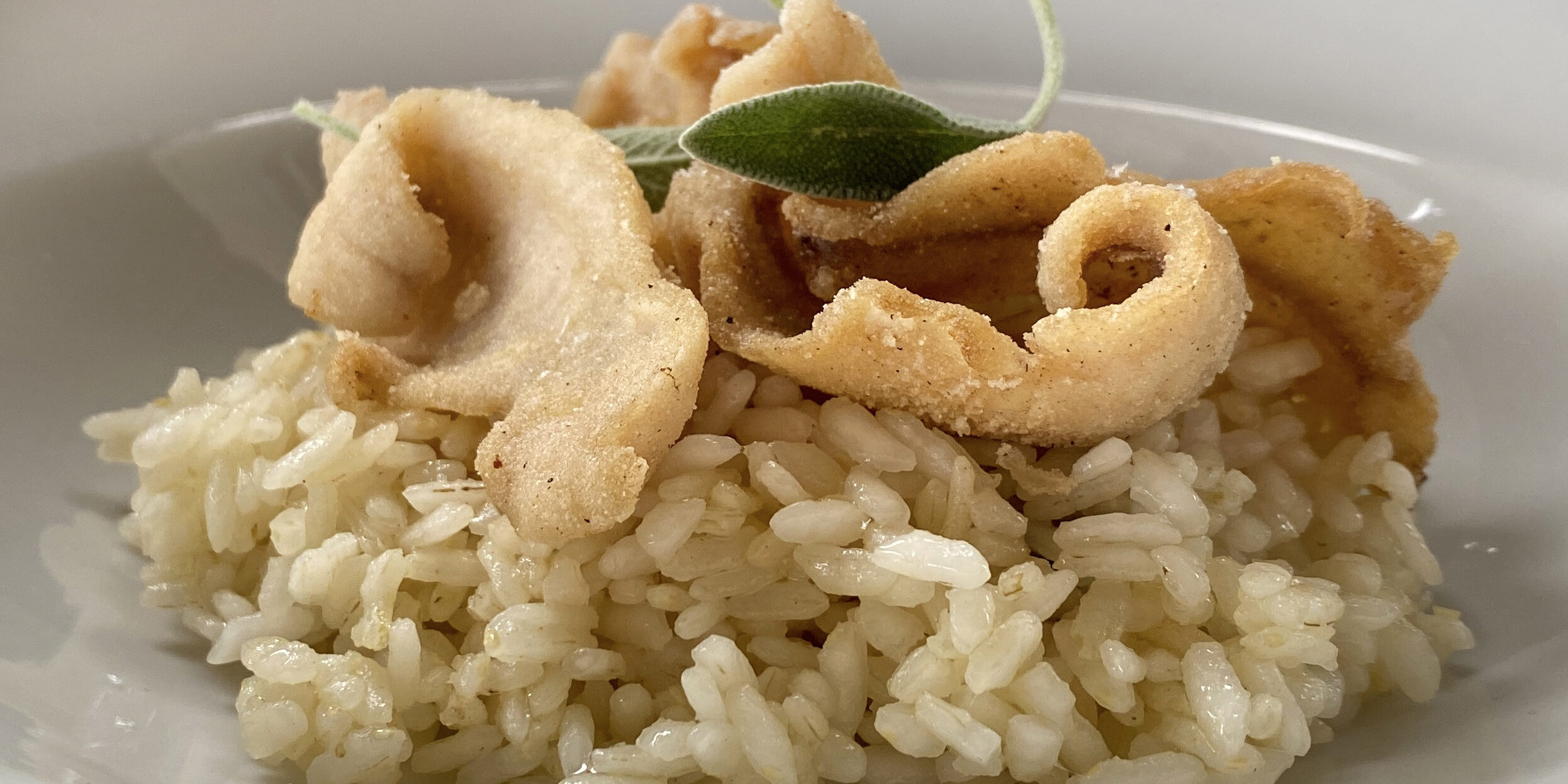
One of the most representative dishes of Lake Como’s culinary tradition is riso in cagnone with perch fillets, a recipe rooted in the cooking traditions of local fishermen and deeply connected to the region’s history.
The original preparation is simple and designed to highlight the delicate flavour of the fish. The rice is boiled in salted water and then dressed with the butter used to cook the perch fillets, which are usually lightly coated in flour and pan-fried with sage. In this way, the rice absorbs the aroma of the butter and herbs, complementing the fish without overpowering its flavour.
This is precisely what makes riso in cagnone distinctive: a straightforward dish born from traditional home cooking, in which the perch remains the true star of the plate.
Over the years, however, the recipe has evolved. In many restaurants, the traditionally boiled rice has gradually been replaced by a creamy, butter-finished risotto, creating a richer and more indulgent version of the dish.
Today, only a few restaurants continue to serve the traditional preparation. Among them is Da Giovannino Bistrot, on the lakefront in Malgrate, where riso in cagnone with perch fillets is still prepared according to the original recipe.
It is no coincidence that this tradition is still preserved in Malgrate, a village that maintains a strong connection with its fishing heritage. Fishing boats can be seen every day on the waters in front of the village, while along the shoreline, particularly in the area known as Porto, between the two bridges connecting Malgrate and Lecco, it is not unusual to see fishermen standing partially submerged in the lake as they fish.
These scenes reflect a living tradition, of which riso in cagnone with perch fillets remains one of the most authentic culinary expressions. A connection between the lake, its people and its cuisine that continues to be an integral part of the region’s identity.
Missoltini: a tradition that tells the story of Lake Como’s fishermen
If there is one speciality that truly reflects the history of Lake Como, it is missoltini.
These are agoni, a type of freshwater fish, preserved through a traditional process of salting, drying and storage. This method developed over time to allow lakeside communities to enjoy fish even during periods when catches were less abundant.
Traditionally, after drying, the fish were arranged and pressed into special containers once known as missolte, from which the name of the speciality derives.
Today, missoltini remain one of the most distinctive products of Lake Como’s culinary heritage. They are usually heated on the grill and served with polenta, often accompanied by a drizzle of olive oil and a few drops of vinegar.
Their strong, distinctive flavour tells the story of a cuisine born from the practical need to preserve food, which gradually became an integral part of the region’s gastronomic identity.
Alborelle and other freshwater fish: the simpler side of lake cuisine
Alongside the better-known species, Lake Como’s culinary traditions also include other freshwater fish, such as alborelle, small fish once widely used in everyday local cooking.
Delicate in flavour, they were often lightly coated in flour and fried, creating a simple, convivial dish closely associated with the eating habits of fishing families.
Trout, pike and other species found in local waters have also featured in traditional recipes, with preparations varying from one area to another and reflecting the availability of the daily catch.
Today, some of these specialities are less common than in the past, partly due to changes in fish populations and restrictions affecting certain species. Nevertheless, they remain an important part of the lake’s culinary memory.
From the lake to the table: a living tradition
Lake Como’s fish cuisine is closely connected to its villages and communities. Places such as Pescarenico, Mandello del Lario, Varenna, Bellano and Dervio still preserve, in different ways, traces of their fishing heritage and their relationship with the lake.
In Pescarenico in particular, this connection remains visible in the neighbourhood’s identity. Historically home to fishing families, the area was also made famous through the pages of Alessandro Manzoni’s novel The Betrothed (I Promessi Sposi).
Gastronomy thus becomes another way to discover the region beyond its most famous landscapes. Behind every traditional fish dish are gestures, preservation techniques and culinary customs passed down through generations.
At the same time, contemporary restaurants help keep this heritage alive by reinterpreting traditional recipes and highlighting locally caught fish whenever available.
Lake fish in autumn: traditional flavours for the cooler season
Although freshwater fish is often associated with summer days and outdoor lunches, many traditional Lake Como recipes are particularly well suited to autumn.
Perch risotto, polenta with missoltini, and baked or pan-fried fish dishes naturally complement the return to richer, more comforting seasonal flavours.
Autumn therefore offers an opportunity to rediscover Lake Como’s culinary heritage through some of its most characteristic specialities, perhaps combining a lunch inspired by local traditions with a visit to one of the villages along the eastern shore.
Because discovering Lake Como also means exploring its gastronomic culture: a heritage of ingredients, recipes and stories that continues to reflect the relationship between the lake and the communities that call it home.