From Lecco’s museums to the history of Moto Guzzi, from historic silk mills to art exhibitions: ideas for discovering Lake Como and the surrounding region, even on rainy days.
Lake Como is a destination that offers much more than its beautiful landscapes. Even when the skies are grey and rain makes outdoor activities less appealing, the region offers plenty of opportunities to enjoy an interesting day exploring art, history, culture and local traditions.
The eastern shore is an excellent starting point for discovering this heritage. From Lecco, visitors can easily reach museums, historic buildings and places that tell the story of the region’s identity, or venture further towards Mandello del Lario, Como and Brianza for a variety of different experiences.
Here are some ideas for turning a rainy day on Lake Como into an opportunity to discover its lesser-known treasures.
Lecco: art, photography and mountaineering at Palazzo delle Paure
In Lecco’s historic centre, Palazzo delle Paure is one of the city’s main cultural landmarks. Overlooking Piazza XX Settembre, it hosts temporary exhibitions and collections dedicated to art and photography.
Among the highlights of autumn 2026 is “Paolo Schiavocampo. Vedere lo spazio e misurare il vuoto” (Seeing space and measuring emptiness), running from 9 October to 22 November. The exhibition is dedicated to the Italian sculptor and painter, whose artistic research spans the second half of the 20th century and explores the relationship between matter, form and space.
Palazzo delle Paure also hosts Capolavoro per Lecco (A masterpiece for Lecco), an annual cultural initiative that brings important works of art to the city, offering visitors the opportunity to discover major masterpieces through exhibitions and educational activities. The 2026–2027 edition is scheduled to run from 6 December to 7 March.
The building is also home to the Lecco Mountaineering Observatory (Osservatorio Alpinistico Lecchese), a space dedicated to the history of mountaineering and the relationship between Lecco and its surrounding mountains. Through stories of remarkable achievements, legendary climbers and historical records, visitors can discover how the Grigne mountains and Mount Resegone have helped shape the city’s identity.
Villa Manzoni: discovering the places connected to the famous writer
Also in Lecco, Villa Manzoni is another important destination for visitors interested in local history and culture.
The residence, once associated with the family of Alessandro Manzoni, houses the Manzoni Museum and explores the relationship between the writer, the Lecco area and his most famous novel, The Betrothed (I Promessi Sposi).
The villa reopened to the public in April 2026 following renovation works, offering a renewed opportunity to discover one of Lecco’s most significant cultural landmarks.
Mandello del Lario: a journey through the history of Moto Guzzi
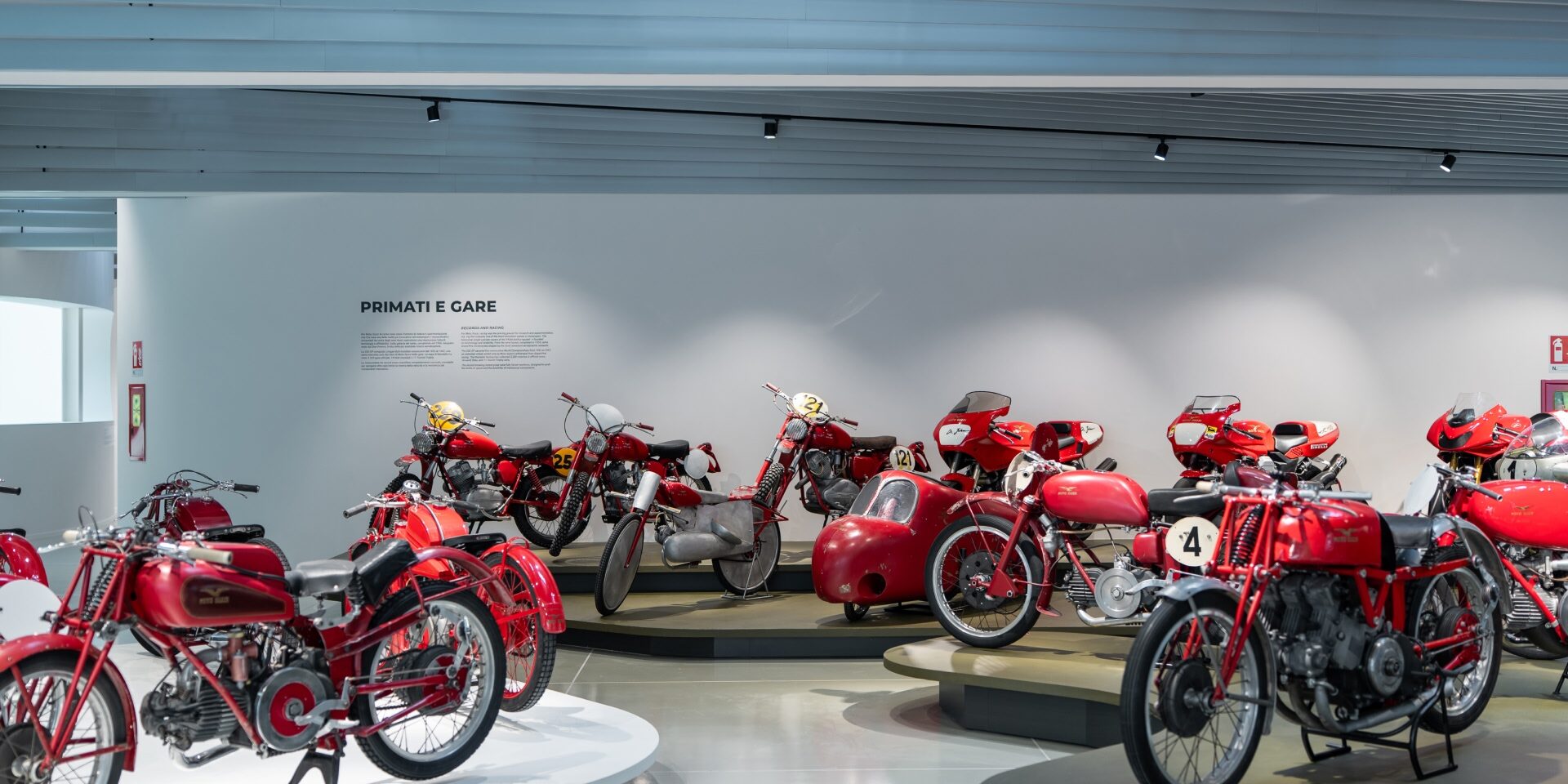
In Mandello del Lario, industrial heritage meets the history of Italian motorcycling. Here, at the factory where Moto Guzzi has been producing motorcycles since 1921, visitors can explore the Moto Guzzi Museum, an interesting destination even for those who are not particularly passionate about motorcycles.
Renovated and reopened in September 2026, the museum tells more than a century of history through a collection of approximately 160 motorcycles, including historic models, prototypes and racing bikes.
The visit reveals how a company founded on the shores of Lake Como became a world-renowned brand, bringing together design, engineering, innovation and industrial heritage.
The museum also welcomes visitors during the autumn and winter months, according to a dedicated visiting schedule.
Abbadia Lariana: the Monti Silk Museum and the history of silk production
In Abbadia Lariana, on the eastern shore of Lake Como, the Monti Silk Museum (Civico Museo Setificio Monti) preserves an important part of the region’s silk-making heritage.
The museum is housed in a historic industrial complex dating back to 1818, when silk manufacturer Pietro Monti converted a building previously used for other activities into a silk-twisting mill.
One of the museum’s most remarkable features is a large circular silk-twisting machine dating from 1818, which has been restored and is still operational, offering visitors a fascinating insight into the techniques once used to process silk thread.
The exhibition includes original machinery, tools and historical records documenting silk production, an industry that played a fundamental role in the economy of Lecco’s communities for many years.
It is a particularly interesting visit for anyone wishing to explore the industrial heritage of Lake Como’s eastern shore and understand the importance of silk manufacturing in the region’s development.
Garlate: the Abegg Silk Museum and the tradition of silk mills
Just a few kilometres from Lecco, on the shores of Lake Garlate, the Abegg Silk Museum (Civico Museo della Seta Abegg) offers an opportunity to discover another important chapter in the region’s economic and social history.
Housed in a former silk mill, the museum preserves machinery, tools and historical records connected to silk production, an activity that shaped the lives and work of local communities for generations.
Visitors can explore the different stages of silk manufacturing and learn about the role silk mills played in the area’s industrial development.
It is also an interesting experience for families, particularly when guided tours and educational activities are available.
Como: the history of silk, from craftsmanship to fashion
For visitors wishing to explore the city of Como, the Como Silk Museum (Museo della Seta) offers a journey through one of the industries that made the region internationally renowned.
Through machinery, tools, fabrics and historical records, the museum traces the evolution of silk manufacturing, from traditional techniques to the developments that established Como as a leading centre for textiles and fashion.
It offers a different perspective on Lake Como, beyond its famous villas and gardens, revealing a world of creativity, manufacturing expertise and craftsmanship that continues to shape the region’s identity today.
Lecco: the Planetarium and the museums of Palazzo Belgiojoso
A rainy day can also be an opportunity to explore science and natural history.
At Palazzo Belgiojoso, Lecco is home to several museum collections dedicated to archaeology, history and the natural world.
The same complex also houses the Lecco Planetarium (Planetario Città di Lecco), which offers educational events and virtual explorations of the night sky through projections and astronomy-related activities.
It is a particularly appealing option for families with children, as well as adults interested in astronomy. The programme varies throughout the year, so it is advisable to check the schedule of upcoming events in advance.
Monza: a day of art and history at the Royal Villa
For visitors interested in exploring beyond the lake and heading towards Brianza, the Royal Villa of Monza (Villa Reale) is one of the region’s most interesting cultural destinations, especially when the weather makes a visit to its extensive park less appealing.
The villa’s interiors tell the story of the residence, from its Habsburg origins to the period of the House of Savoy, through royal apartments, grand reception rooms and richly decorated spaces.
A visit offers the opportunity to discover one of Lombardy’s finest examples of Neoclassical architecture while learning about the royal families who once lived there.
Another way to discover Lake Como
A rainy day can become an opportunity to explore aspects of the region that often receive less attention than its celebrated scenery.
From Lecco’s mountaineering heritage to major industrial achievements, from historic silk mills to art collections, museums and cultural landmarks reveal a rich and diverse heritage.
Starting from the eastern shore of Lake Como, visitors can create cultural itineraries suited to different interests, discovering stories, traditions and places worth exploring in every season.