From aristocratic villas to the grand hotels of the Belle Époque: a journey through the history of tourism on Lake Como, exploring hospitality, culture and the transformation of the region.
Today, Lake Como is one of the world’s best-known travel destinations, celebrated for its historic villas, elegant hotels and beautiful landscapes that attract visitors from across the globe. But when did this story begin?
To find out, we need to go back more than two centuries, when staying on the lake was a privilege reserved mainly for the aristocracy and wealthy families.
Since then, the region has undergone a remarkable transformation: from private residences to the first grand hotels, and eventually to the contemporary properties that continue to reinvent its tradition of hospitality.
Aristocratic Villas and the First Holidays on the Lake
As early as the 18th and 19th centuries, Lake Como was a popular retreat for the nobility and upper classes of Lombardy and Europe.
Its proximity to Milan, mild climate and beautiful scenery encouraged the construction of elegant residences designed for seasonal stays. These villas were places for entertaining and socialising, where wealthy families could spend extended holidays, welcome guests and host events.
Villa Carlotta in Tremezzo, Villa Melzi d’Eril in Bellagio and Villa Olmo in Como still bear witness to this period, when architecture, gardens and the surrounding landscape helped establish the lake’s distinctive appeal.
During the same era, Lake Como also began attracting European writers, artists and travellers, who captured its beauty in diaries, literary works and travel accounts.
The 19th Century and the Birth of Modern Tourism
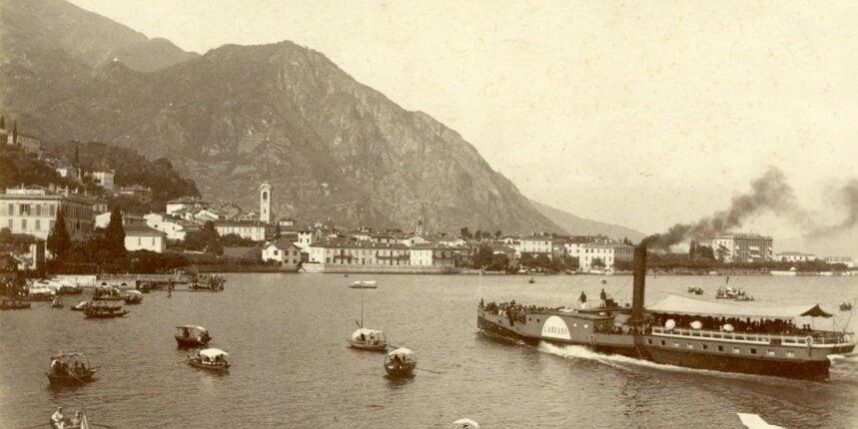
A major turning point came during the 19th century, with improvements in transport connections and the introduction of steam-powered boats.
Steamships made travelling between lakeside towns easier, gradually opening up the region to a wider range of visitors. Staying for long periods in a private residence was no longer the only way to experience the lake: travellers could now explore different villages, visit villas and gardens, and discover new destinations.
Bellagio, Menaggio and Tremezzo strengthened their reputation as holiday resorts, while Lake Como gradually established itself as a recognised travel destination.
Credits: Milano.Repubblica.it
The Belle Époque and the Rise of Grand Hotels
Between the second half of the 19th century and the beginning of the 20th century, the first grand hotels began to appear alongside the aristocratic villas, designed to welcome an international clientele.
In 1873, the Grand Hotel Villa Serbelloni in Bellagio opened as a hotel, having previously been a private residence. In 1910, the Grand Hotel Tremezzo was inaugurated, eventually becoming one of the symbols of hospitality on the lake.
These establishments offered much more than elegant accommodation. They were important centres of social life, with grand lounges, restaurants, panoramic terraces and gardens where guests could meet and spend time together.
Lake Como had become one of Europe’s leading holiday destinations.
Malgrate and the Tradition of Hospitality on the Eastern Shore
Over time, the eastern shore of Lake Como also developed its own hospitality tradition, supported by its proximity to Lecco and transport connections with Milan.
In Malgrate, a lakeside village directly opposite Lecco, this heritage can also be seen in the Hotel Promessi Sposi, considered the oldest hotel on the eastern branch of Lake Como.
Located in the historic heart of the village, the hotel represents a connection between the area’s longstanding hospitality tradition and contemporary tourism.
Its recent renovation has reinterpreted the historic building through contemporary architecture, introducing new dining and wellness experiences.
This transformation reflects the wider evolution of the region, where historic properties now coexist with new approaches to hospitality.
Lake Como Today: A Destination That Continues to Evolve
Throughout the 20th century, improvements in transport and changing travel habits gradually made Lake Como accessible to a broader range of visitors.
Traditional summer holidays were joined by shorter stays, cultural experiences, culinary journeys and outdoor activities.
Today, alongside the lake’s most famous destinations, Lecco, Malgrate and the eastern shore are gaining increasing recognition, offering visitors the opportunity to discover the region through its mountains, villages and local traditions.
From aristocratic villas to grand hotels and contemporary hospitality, the history of tourism on Lake Como reflects more than two centuries of change.
It is a story that continues to evolve, while maintaining a deep connection with the landscape, culture and identity of the region.