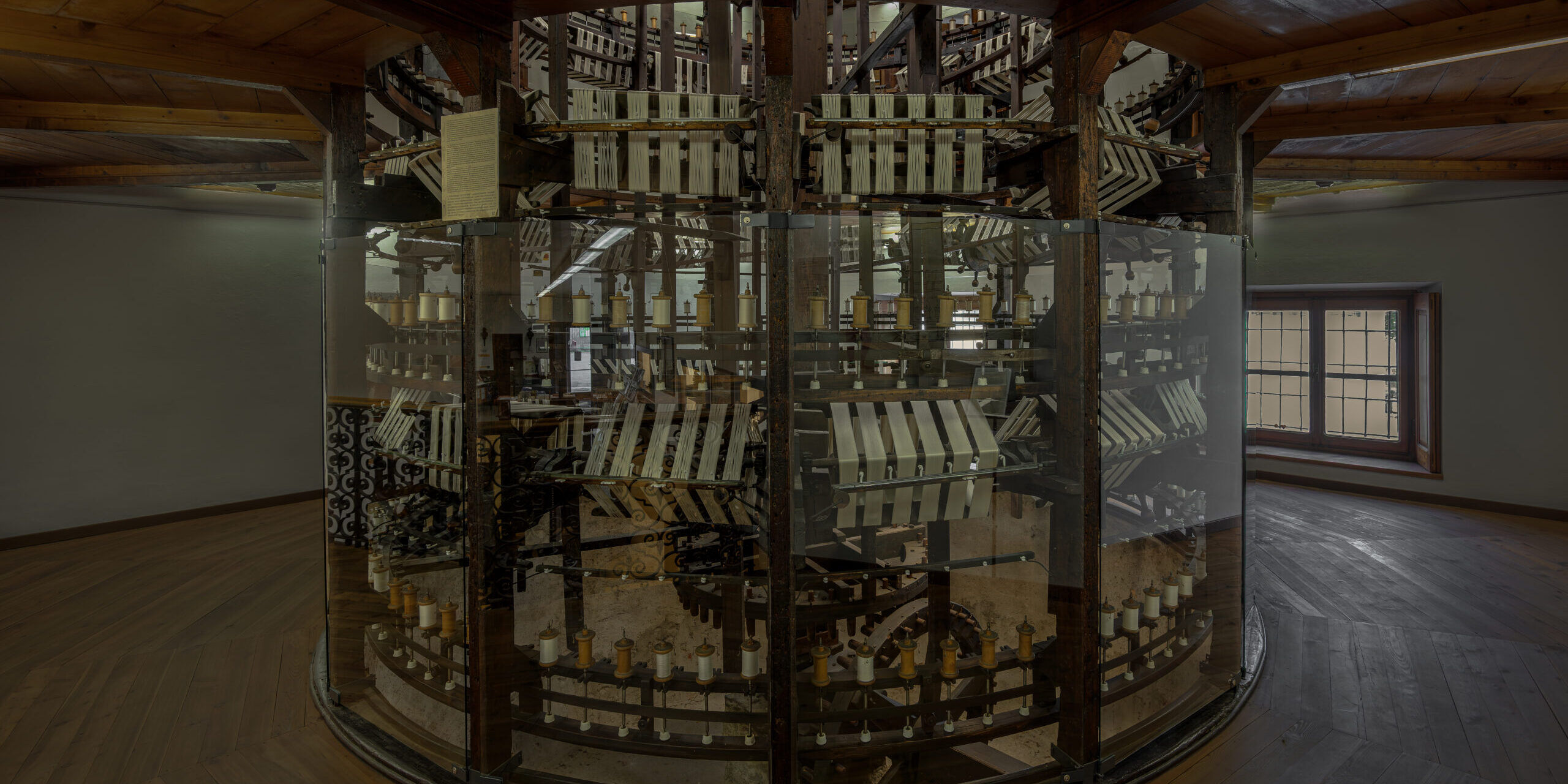
From the historic silk mills of Garlate to Como’s renowned textile industry: a journey through the history of silk, craftsmanship and innovation, exploring a heritage that connects both shores of the lake.
For generations, silk production shaped the lives of communities across the Lecco and Como areas. Silk mills, silkworm farming and textile workshops formed part of a production network that connected small villages, farming families and industrial centres, contributing to the economic and social development of the entire Lake Como region.
Silk also left an important legacy on the eastern shore, with landmarks such as the historic silk mill in Garlate, now home to the Abegg Silk Museum. From these places, where the earliest stages of silk processing took place, the story connects with that of Como’s textile district, which eventually became an international centre for the production of luxury fabrics.
This heritage offers an opportunity to discover a lesser-known side of the region, through a tradition that brought together lakeside communities and carried their expertise far beyond Italy.
Silk in the Lecco area: a tradition rooted in rural life and industry
Silk production has deep roots in the Lecco and Brianza areas. For centuries, mulberry cultivation and silkworm farming were important activities for rural families, who often combined this work with their everyday agricultural tasks.
Mulberry leaves were used to feed silkworms, whose cocoons provided the precious silk thread. The process required time, care and skills passed down from one generation to the next.
During the 19th century, silk production became increasingly industrialised. Numerous silk mills were established, where cocoons were processed to obtain the thread used in the subsequent stages of textile manufacturing.
These activities employed a significant part of the local population, particularly women, and helped transform the economies of many villages throughout the Lecco area.
Garlate and the Abegg silk museum: a heritage worth discovering
One of the most significant reminders of this history can be found in Garlate, just a few kilometres from Lecco, on the shores of Lake Garlate.
Here, inside a former silk mill, the Abegg Silk Museum (Civico Museo della Seta Abegg) is dedicated to the history of silk production and the techniques developed over the centuries.
The museum houses an important collection of machinery, tools and equipment that illustrates the different stages of production, from processing silkworm cocoons to transforming them into silk thread.
Founded in 1953 by the Abegg family, whose history is closely connected to the silk industry, the museum is now an important centre for preserving the region’s industrial heritage.
A visit offers the opportunity to discover an aspect of local history that profoundly influenced the lives of its communities, revealing how silk production was closely linked to everyday work and technological progress.
For visitors staying in Lecco or Malgrate, the museum is easily accessible and offers an interesting opportunity to explore a different side of Lake Como’s eastern shore.
From Brianza to Como: a region connected by silk
The history of silk in the Lecco area is part of a much broader manufacturing tradition that involved Brianza and the Como region for centuries.
While silkworm farming and the initial stages of silk processing were widespread in rural areas and smaller towns, Como gradually developed a strong specialisation in weaving, dyeing and fabric printing.
Between the 19th and 20th centuries, Como’s textile district established itself as one of Europe’s leading centres for silk manufacturing, thanks to the quality of its products and the expertise developed by local companies.
Silk thus became a common thread connecting different areas, creating a network of manufacturing activities that contributed to the economic growth of the entire region.
 Como and the world’s leading fashion houses
During the 20th century, Como’s silk industry became increasingly renowned for producing high-quality fabrics, particularly for luxury clothing and accessories.
Silk scarves, ties and printed fabrics helped bring Como’s name to international markets, becoming part of the collections of leading fashion houses around the world.
What makes this tradition distinctive is not only the quality of the material, but also the creativity of its patterns, the sophisticated use of colour and the precision of its manufacturing techniques.
Visitors interested in exploring this heritage can visit the Como Silk Museum (Museo della Seta), where machinery, fabrics and historical documents trace the evolution of the silk industry and its relationship with the fashion world.
A tradition that continues to evolve
Today, the textile industry has undergone significant changes compared with the past, but silk remains an important part of the region’s economic and cultural identity.
Companies in the Como textile district combine traditional expertise with new technologies, research and innovation, while museums and archives help preserve the memory of a manufacturing heritage that shaped the lives of entire generations.
From the historic silk mills of the Lecco area to the fabrics created for the world’s leading fashion houses, the history of silk tells the story of a region built on craftsmanship, creativity and knowledge passed down through generations.
A heritage that connects the different areas of Lake Como and continues to reveal an essential part of their identity, extending far beyond the region’s reputation as a tourist destination.